The moral argument for God
Categories: religion philosophy arguments for god
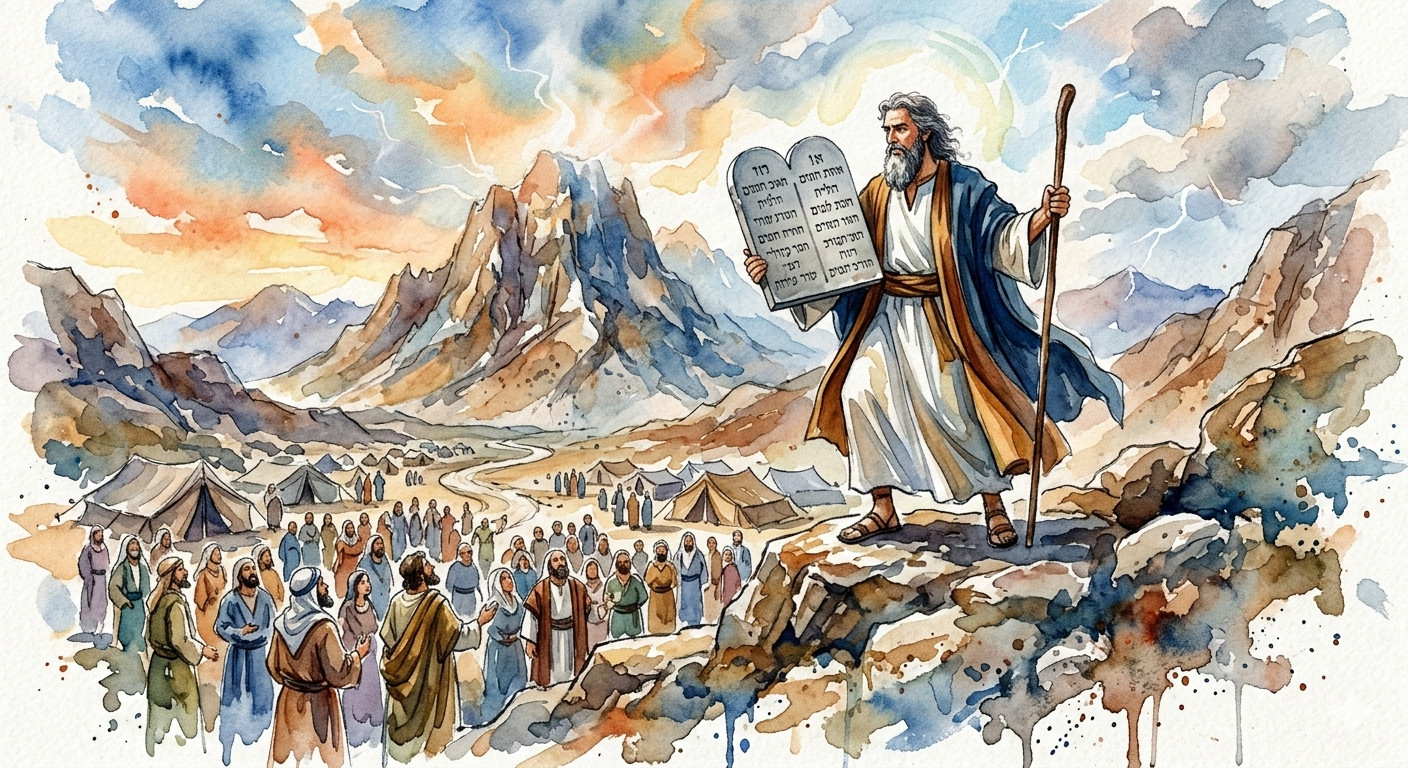
People spend a lot of time arguing about what is right and wrong. But hiding beneath those arguments are two irreconcilable world views. Some believe in an absolute moral code, a very real (but invisible) God-given rulebook out there that everyone should be following. And some think that we can only do our best to decide what is right and wrong based on our current understanding of what is fair and just.
This feeling, that morality isn't just a matter of opinion but something "baked into" the universe, is the heart of the argument from morality.
The question, for those who believe in the rulebook, is where did that rulebook come from? For centuries, people have argued that if there are real, objective moral rules, there must be a God who wrote them. But for those who do not believe that absolute, objective morality exists, there is no need to look to God for an explanation.
The Believer’s Case: "God is the Only Solid Ground"
For many believers, the most obvious sign that God exists is our sense of right and wrong. They argue that if there is no God, morality is just a human invention, like the rules of football. Although some believe that God invented football, too.
There are several deeper reasons why people might assume God is responsible for our sense of right or wrong.
1. There must be a Divine Rule-Maker
One of the most popular ideas here is Divine Command Theory. In simple terms, an action is "good" because God says so, and "bad" because He forbids it. Thinkers like Robert Adams argue that morality needs an objective anchor. If the universe started from a personal, moral being (God), then it makes sense that there are real moral truths. Without that anchor, we’re just left with our own shifting feelings.
2. The Internal "Compass"
C.S. Lewis, a famous writer and thinker, pointed out that when people argue, they don't just say they don't like what the other person is doing, they appeal to a "Law of Nature" they expect the other person to know. He argued this "mind-like guide" points to a supernatural source because the physical world of science can tell us how things are, but it can't tell us how they ought to be.
3. Why Bother Being Good?
Believers also ask, if we’re all just "self-sustaining chemical reactions" that will one day disappear, why sacrifice your own happiness for someone else?. They argue that a world with God provides a reason to be moral - justice will eventually win out, and our choices actually matter in the long run.
Perhaps what believers are missing here is that, of course, even those who don't believe in God do still have a sense of right and wrong. Aside from sociopaths and psychopaths, we all do. We all have a conscience, we all feel bad if we do something that we know is wrong. It is easy to see why someone might think this sense of right and wrong comes from God, but other explanations don't rely on supernatural causes.
To non-believers, the conscience (and emotions in general) are evolved mechanisms. They are the way our evolved brain can direct our conscious decisions. The human brain is the pinnacle of a billion years of evolution and knows a lot about how to survive. An individual human rarely reaches 100 years and knows nothing. Our brain makes us feel good when we are doing something that is good for our survival chances, and makes us feel very bad if we set off down the wrong route.
The Big Catch: The Euthyphro Dilemma
Before we jump to the other side, we have to talk about a problem that has bothered thinkers for over 2,000 years. It’s called Euthyphro’s Dilemma, named after a conversation recorded by the Greek philosopher Plato.
Socrates asked a tricky question: Is something good because God loves it, or does God love it because it is already good?. The problem is that, in either case, God doesn't come out of it looking good.
- Option A: If things are good just because God says so, then morality is arbitrary. If God suddenly commanded us to drown kittens for fun, would that then be "good"? Most people say no way.
- Option B: If God loves things because they are already good, then God isn't the source of morality. Morality would be a law that exists outside of God, and He’s just following it like the rest of us.
Many modern believers "grasp both horns" of this dilemma by saying that morality isn't a separate rulebook or a random whim. It’s a direct reflection of God’s unchanging, perfectly good character. Although if you press them further to explain exactly what that means, they will probably tell you that it is beyond human ability to fully understand. God moves in mysterious ways.
The Non-Believer’s Case: "We Can Be Good Without God"
Non-believers argue that we don't need a supernatural explanation for our "moral compass." They think we can explain right and wrong using science and logic alone.
1. The Survival Instinct (Evolution)
Many scientists and philosophers, like Michael Ruse and E.O. Wilson, argue that morality is a biological adaptation. Basically, our ancestors who worked together, shared food, and didn't kill each other were more likely to survive and have kids. Over millions of years, "being good" got hard-wired into our brains because it was a "good biological strategy". On this view, morality is a "useful mistake" our genes play on us to keep the species going.
In fact, these types of behaviours are common in pack animals, such as wolves and primates. They exhibit empathy, a sense of fairness, they have rules and may punish members of the pack who break the rules, and even sometimes show altruism. Of course, these might well be evolved instincts rather than moral choices, but that might also be true of humans sometimes. If you have ever seen a dog that knows it has done something wrong, the guilt and shame are obvious.
2. Morality keeps changing
Some general moral rules have indeed been around since the dawn of time, for example, murder and theft are considered immoral in most societies and at most times in history. But many moral standards have changed over time and vary across the world. For example, slavery has been acceptable at various times but is now considered to be totally immoral. Whereas in earlier times, sex outside marriage was considered a sin, often punished severely, even by death. But today, many people see absolutely nothing wrong with it.
Believers might argue that many modern laws are not all morally based, many just represent societal norms or practicalities. For example, laws that say you must pay your taxes, or you cannot buy alcohol until you are old enough, are clearly man-made, rather than God-given. That is true to sme extent.
They might also say that God's laws are written in our hearts. We know right from wrong, and if we decide to do wrong, it is deliberate. But looking at the example of slavery, which has existed in many parts of the world for thousands of years. If all those societies were completely immoral for all that time, then maybe we aren't capable of knowing what God wants?
To non-believers, this seems like evidence against an objective, universal definition of morality.
3. The "Queerness" of Moral Facts
Philosopher J.L. Mackie argued that if objective moral facts really existed—like invisible "thou shalt nots" floating in space—they would be "qualities or relations of a very strange sort, utterly different from anything else in the universe". He thought it was much more likely that we just project our own feelings and social rules onto the world around us.
Believers might argue that morality comes from God. If you think it is strange that morality exists, so what? God created it, so it needs no other explanation.
4. Moral Facts Without the Myths
Interestingly, some atheists, for example Colin McGinn, believe that objective moral truths are real, but they don't think they have anything to do with God. He compares morality to math: "2 + 2 = 4" is true everywhere in the universe, and it doesn't need a God to make it true. Similarly, "hurting people is wrong" might just be a fundamental truth of reality that doesn't require a Creator.
However, this might be hindsight bias. We look back at history and see all the faults with morality in the past - they were racist, they hanged people for petty theft, and so on. And while our morality isn't perfect, we have fixed all those problems, so modern morality must be better than it was. If we keep going, our morality will get better and better, implying there might be a moral code that is objectively getting close to being perfect.
What we miss is all the new, bad things we are doing that future generations might look back on with disgust. Wreckless damage to the Earth's climate, for example, or massive wealth inequality that we are doing very little to mitigate. We are probably as bad as any other generation, we are just blind to it.
The Middle Ground: Kant and the "Highest Good"
The famous philosopher Immanuel Kant took a unique path. He admitted we can't "prove" God exists through logic, but he argued that we should act as if He does for the sake of our own sanity.
Kant’s idea was that morality points toward a goal he called the "Highest Good". A world where people are both perfectly virtuous and perfectly happy. But in the real world, bad things happen to good people all the time. Kant argued that for morality to make sense, we have to hope that there is a God and an afterlife where things finally get squared away. For Kant, God is a "necessary assumption" that gives us the "rational license" to keep trying to be good, even when the world seems dark.
Conclusion: Where Does That Leave Us?
So, do we need God to be good? It depends on who you ask.
- Believers say that without God, morality is just a survival trick or a personal opinion with no real authority.
- Non-believers say that morality is either a clever product of evolution or a set of logical truths that exist all on their own.
Perhaps what this shows is that our ideas about right and wrong are tied to our deepest beliefs about where we came from and where we’re going. Whether you see morality as a divine gift, a biological tool, or a logical fact, it remains one of the most powerful and mysterious parts of the human experience.