Never Stop Learning - How Retirement Can Be the Start of Your Greatest Education
Categories: retirement
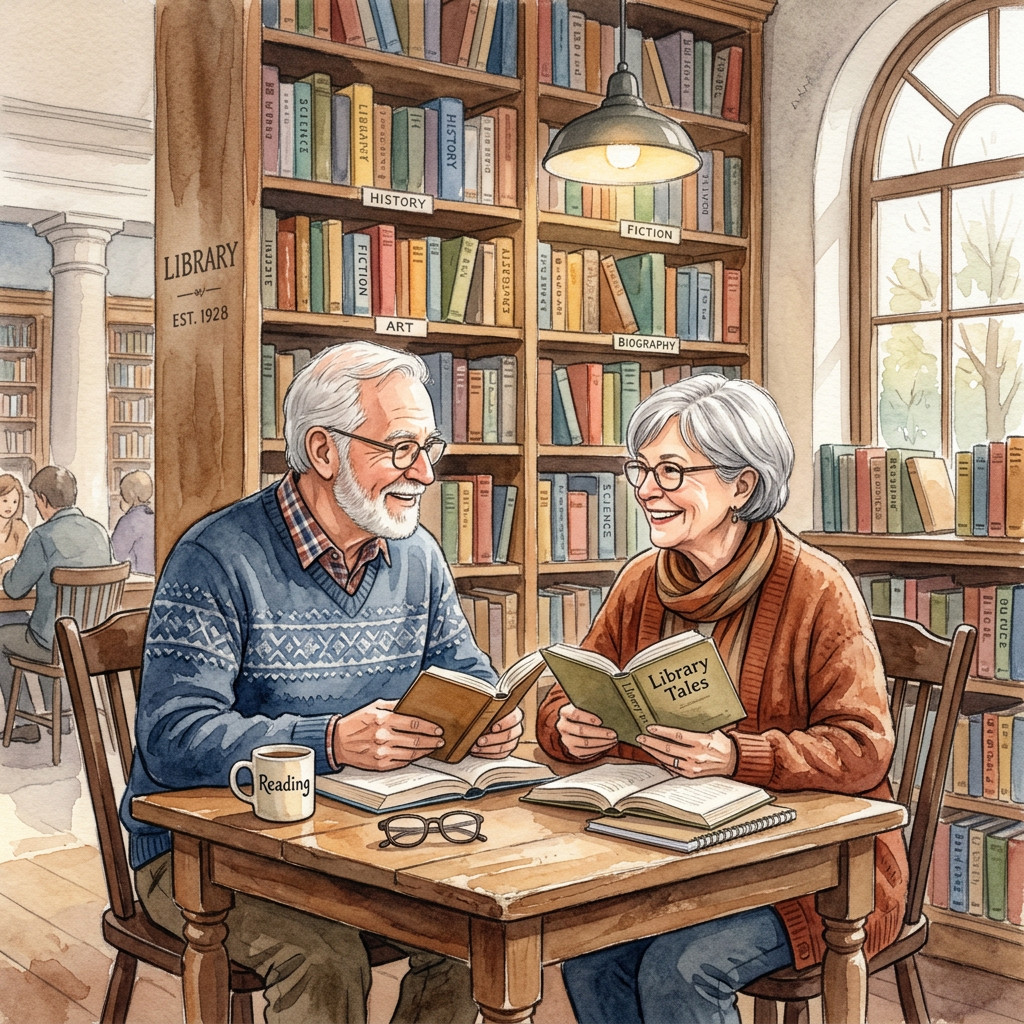
Across the United Kingdom, a quiet revolution is taking place in living rooms, libraries, and community halls. Retired men and women in their sixties, seventies, eighties, and beyond are learning new languages, mastering computers, studying history, painting, exploring philosophy, and finding passions they never had time for before. They approach these new interests with enthusiasm and purpose, and often at no cost.
Many people believe that learning is only for the young, but this is simply not true. Retirement can be the most rewarding time for learning because, for the first time, you can choose exactly what to study, at your own pace, guided by curiosity and enjoyment instead of work or exams. There are no deadlines, no performance reviews, and no required syllabus. Just the simple pleasure of discovering something new.
Thanks to the internet and the UK's excellent libraries, community groups, and educational charities, many lifelong learning opportunities are free.
Why Learning Matters More Than Ever in Retirement
Before looking at the many free and low-cost learning options for UK retirees, it helps to understand how important continued learning is for health and well-being later in life.
The evidence is strong. Many studies show that staying mentally active through learning can greatly lower the risk of cognitive decline and dementia. Mental stimulation builds what neuroscientists call cognitive reserve, which means the brain's ability to stay resilient and adapt. This helps protect against age-related changes, even as the brain itself physically changes.
Learning in retirement does more than help your brain. It can reduce anxiety and depression, boost self-esteem and purpose, and help you connect with others. When you join a class, attend a lecture, or take part in an online learning group, you are not just gaining knowledge. You are also building relationships, keeping your sense of identity, and reminding yourself that you still have much to offer and learn.
In short, lifelong learning is not just a nice extra for retired people. In many ways, it is an important part of staying healthy.
The UK's Free Learning Landscape - More Than You Might Expect
The United Kingdom has a strong tradition of adult education, and there are many free and low-cost learning options for retirees. The main challenge is often just knowing where to find them.
Your Local Library - Still One of Britain's Greatest Free Resources
Let's start with one of the most overlooked resources in almost every British town: the public library. Even in a time of Netflix and social media, libraries are more relevant and useful than ever. Your free library card gives you access to a wide range of learning resources that many people don't know about.
Besides lending books - including large collections of non-fiction on history, science, philosophy, art, biography, and more - many UK libraries now offer free digital access to platforms like Libby and BorrowBox. These let you borrow e-books and audiobooks straight to your smartphone, tablet, or computer. This is especially helpful for retirees with visual impairments or those who find physical books hard to handle.
Many libraries also offer free access to online learning platforms like LinkedIn Learning (formerly Lynda.com), which has hundreds of courses in technology, creative skills, and business topics. Some libraries also provide free access to language learning tools such as Mango Languages or Rosetta Stone, which would normally cost a lot each month. Just asking at your local library desk could reveal a whole world of digital learning resources, all free with your library card.
Libraries also run a growing number of in-person events, such as author talks, history lectures, reading groups, film screenings, and craft workshops. Most of these are free to attend. Libraries are true community learning hubs, and for retirees on a budget, they offer great value.
The University of the Third Age - A National Treasure for Retirees
If there is one organisation that every retired person in the UK should know about, it is the U3A - the University of the Third Age. Founded in the UK in 1982, U3A has grown into a nationwide network of over 1,000 local groups with more than 400,000 members, making it one of the largest and most successful lifelong learning movements in the world.
The idea behind U3A is simple: retired and semi-retired people come together to share skills, knowledge, and interests in a self-directed, friendly learning environment. There are no traditional teachers or students. Instead, members with experience in a subject lead groups for others who want to learn. Subjects include languages, local history, creative writing, music appreciation, digital skills, philosophy, astronomy, watercolour painting, science, and many more. The range depends on the local group, but it is almost always impressive.
Annual membership fees for U3A groups are usually modest, often between £15 and £30 per year, and individual group sessions often cost just a pound or two to cover room hire. For this small investment, members get access to a wide range of learning activities and, just as importantly, a friendly social community of like-minded people. Many U3A members say joining was one of the best and most life-changing choices they made in retirement.
To find your nearest U3A group, visit u3a.org.uk and search by postcode.
Free Online Learning - A World of Knowledge at Your Fingertips
The internet has made education much more accessible, especially with the many free online learning platforms now available. For UK retirees who are comfortable using basic technology, as many of us are, these platforms offer world-class education at no cost.
The Open University has led the way in making education accessible in the UK. Its free learning platform, OpenLearn (open.edu/openlearn), offers over 1,000 free courses in a wide range of subjects, from history, literature, and psychology to science, maths, and technology. The courses are written by the same academics who teach OU degree programmes, and many offer a digital badge or certificate when you finish. For retirees who want real academic quality without the cost, OpenLearn is a great choice.
Coursera and edX are two of the world's biggest online learning platforms, offering courses from top universities like Oxford, Cambridge, Harvard, and MIT. Many courses can be audited for free, so you can watch all the lectures and use all the materials without paying. You only pay if you want a certificate. Subjects include philosophy, creative writing, coding, data science, and climate change.
FutureLearn, which was started by the Open University, also offers a wide range of free short courses from UK and international universities. Many of these are especially relevant to retirees, such as courses on health and wellbeing, family history, digital skills, and creative arts.
If you are interested in the arts and humanities, Gresham College in London has offered free public lectures for over 400 years, and now these are available online. The full archive of lectures on history, music, medicine, law, science, and literature is free to watch at gresham.ac.uk. Anyone in the country with internet access can also attend live online lectures at no cost.
Learning Digital Skills - Bridging the Confidence Gap
For some retirees, the biggest barrier to free online learning is not a lack of interest, but a lack of confidence with technology. This is understandable. Many people who retired before smartphones became common can feel left behind in today's digital world, and that can be isolating.
Luckily, there is excellent free support in the UK for this. AbilityNet and Good Things Foundation both run programs to help older people improve their digital skills and confidence. The Good Things Foundation's Digital Unite platform has easy-to-follow guides on everything from setting up email and using video calls to shopping safely online and using NHS services digitally.
Many local libraries, Age UK branches, and community centres offer free digital skills workshops and one-to-one sessions for older people. Age UK has trained thousands of volunteer Digital Champions who provide patient, friendly support to help older people feel more confident online. These sessions are free, welcoming, and designed with older learners in mind.
HMRC and Citizens Advice also offer free digital support sessions in many areas, helping retirees manage their finances, access government services, and stay safe online.
Community Colleges, WEA, and Local Learning Centres
The Workers' Educational Association (WEA) is one of the UK's oldest and most respected adult education groups, with over a hundred years of experience bringing affordable learning to communities in England, Scotland, and Wales. The WEA offers hundreds of part-time courses each year in subjects like creative writing, local history, art appreciation, languages, philosophy, and digital skills. Fees are kept low, and there are big discounts for those on pension credit or other benefits. Some courses are even free for people on low incomes.
Many further education colleges across the UK also offer a wide range of part-time adult learning courses at lower rates for people over 60 or on low incomes. These are a great option if you prefer more structured, classroom-based learning, as they offer both the social benefits of meeting other students and the rewards of study. frequently run free or low-cost talks, workshops, and educational events as well. The Victoria and Albert Museum, the British Museum, the National Galleries of Scotland, and dozens of regional museums offer free entry and a rich programme of free events year-round. Many larger museums also have dedicated learning programmes for older adults, often run in partnership with local councils or health organisations.
Learning as a Social Experience - The Connection Factor
Learning in retirement is not just about gaining knowledge. For many retirees, the social side is just as important, if not more so. Joining a class, reading group, language exchange, or online learning community connects you with others who share your interests. These connections can grow into lasting friendships.
This is very important for well-being. Social isolation in retirement is a real problem in the UK, and the regular interaction that learning groups offer creates a sense of belonging and community that is hard to find elsewhere. Attending a history class or creative writing group each week gives structure and meaning to your days, helps you meet new people, and reminds you in a clear way that your mind is still active.
Getting Started - Your First Steps
If this article has reminded you of an old interest, a dream you put off, or a quiet curiosity you never had time to explore, here's how to get started:
-
Visit your library this week and ask about the free digital learning resources included with your membership.
-
Browse OpenLearn (open.edu/openlearn) and find one short course that genuinely excites you - and start it today.
-
Search for your local U3A group at u3a.org.uk and check which subject groups they offer.
-
Contact your local Age UK branch if digital confidence is holding you back - free help is available.
-
Look up your nearest WEA branch at wea.org.uk to explore affordable structured courses in your area.
Summary
Retirement is not the end of your story, it is the start of a whole new chapter. The subjects you always wanted to study, the language you hoped to learn, the history you found fascinating, and the creative skills you admired are all waiting for you now. In the UK today, most of these opportunities are available for little or no cost.
Learning keeps your mind sharp, gives your days purpose, connects you with others, and brings a deep joy that does not fade with age. The best education of your life might be the one you are about to start.