Turning 60: Ten Things Nobody Warns You About
Categories: retirement
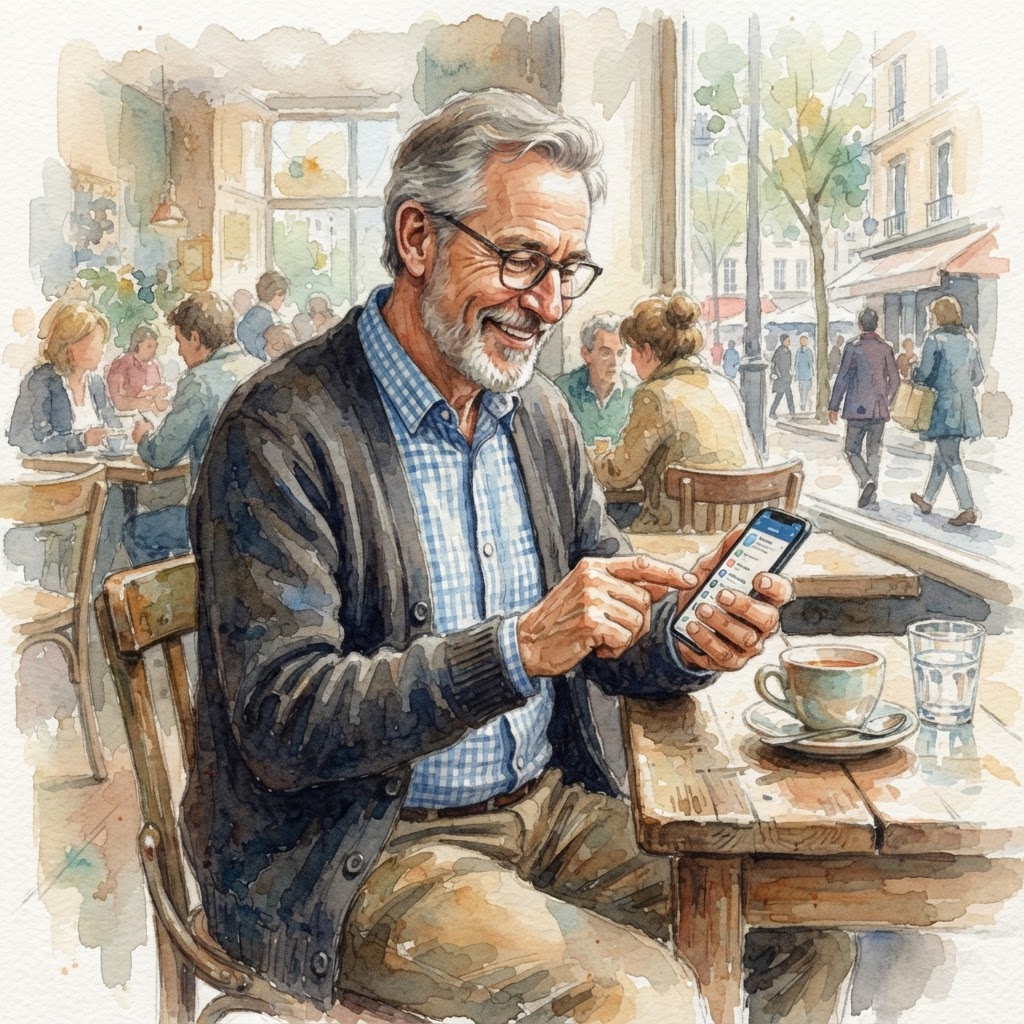
There comes a specific moment, often around your 58th or 59th birthday, when you realise that the decade ahead isn't simply going to be "more of the same, but with grey hair." Something shifts within you. This change doesn't happen all at once, nor does it unfold in the ways that greeting cards or retirement brochures might suggest. Yes, your junk mail will start to include pamphlets for will-writing and equity release, but the real changes are stranger, more personal, and often catch people completely off guard.
After talking to many people navigating this decade, and overhearing numerous conversations at family barbecues, here are ten shifts that often surprise even the most self-aware individuals.
1. Your Sleep Schedule Rewrites Itself Without Asking Permission
As you enter your 60s, you may find yourself waking up at 6:15 a.m. ready to start your day, while everyone else is still asleep. This isn't a personality change, it's simply biology at work. As people age, deep sleep naturally decreases, and their circadian rhythm shifts to an earlier schedule. The 22-year-old who could sleep until noon is long gone, replaced by someone who genuinely enjoys the beauty of sunrise.
And on the flip side, needing a nap should no longer be a source of guilt. A 20-minute afternoon rest transforms from being "lazy" to "strategic energy management." Embrace it. Your body knows what it needs, even if it didn't consult you first.
2. Time Starts Playing Tricks on You
Here's an intriguing phenomenon. Individual days can feel long and relaxed: a slow coffee, a leisurely walk, an afternoon that stretches out nicely. But entire years seem to pass in the blink of an eye. Ask anyone in their 60s how it’s already July or how their grandchild has suddenly turned twelve, and you’ll likely receive a similar bewildered shrug.
Psychologists refer to this as the "time paradox." It occurs because fewer new and novel experiences cause the brain to compress memories of routine periods. The solution isn't complicated, although it may not be easy. Introducing new experiences can help slow down our perception of time. This isn't just a nice idea, it's essentially why people try pottery or finally decide to book that trip to Portugal.
3. Food Stops Tasting the Way It Used To
At this stage of life, many individuals notice a shift in their cravings. They may find that they no longer crave sugar as they once did, or that a glass of wine affects them differently than it did at age 35. As people age, taste buds can decline, appetite regulation changes, and alcohol tolerance often decreases, much to the disappointment of some.
However, this doesn’t have to be viewed negatively. Many people in their 60s actually report enjoying food more, though in a different way. They tend to prefer richer, more complex flavours instead of sugary ones and find satisfaction in smaller portions rather than feeling restricted by them. It’s less about “getting old” and more about “your palate finally maturing,” even if that maturation took six decades to achieve.
4. You Stop Caring What Strangers Think (Finally)
If there's one perk of this decade that is universally appreciated, it’s that the mental energy previously spent worrying about how others perceive you has largely faded away. Research on ageing and personality consistently shows that social anxiety tends to decrease with age, and self-reported life satisfaction often follows a U-shaped curve—dipping during midlife and then rising again later.
People in their 60s confidently say no to things without feeling the need to over-explain. They wear bold shirts and ask the “obvious” questions in meetings because they no longer care about judgment. This isn’t apathy, it is earned confidence. You have navigated enough awkward situations to realise that most of them will be forgotten by lunchtime.
5. Your Appetite for Risk Does a Strange Flip
As people enter their 60s, they often become more cautious with their finances. Of course, that is a sensible approach, given that there is less time to recover from poor investments. However, emotionally and socially, something surprising often happens. Individuals become bolder. They may decide to try surfing, relocate to another country, or finally express feelings they have held back for 20 years.
This phenomenon creates an interesting contrast. While people become more conservative with their money, they become more adventurous in their life choices. The common thread appears to be a heightened awareness that time is the truly limited resource, rather than opportunities. Money can be saved for a rainy day, but experiences are fleeting and cannot wait.
6. Success Gets a Whole New Definition
For decades, success may have been defined by promotions, salary increases, and corner offices. However, by the time people reach their 60s, that conventional measure of success often seems hollow. When you ask most individuals in this age group what they take pride in, it's rarely about job titles. Instead, they often mention repairing a relationship, teaching a grandchild to fish, or taking a memorable trip with an old friend before it was too late.
This shift isn't about resigning or "giving up on ambition." Rather, it's about redefining ambition and making it more meaningful. The goals become more specific and deeply human. Instead of saying "be successful," the focus shifts to "be present," "be kind," and "leave things better than I found them." These goals may seem smaller in scope, but they are arguably much harder to achieve.
7. Your Friend Group Shrinks—And Somehow Gets Better
This can be difficult to accept at first. Your circle of friends may shrink. People move away, drift apart, or stop being the friends you need them to be. However, the friendships that remain in your 60s tend to be stronger, deeper, and surprisingly low-maintenance. There’s less small talk and less need to perform. Instead, it’s more about sitting comfortably in silence with someone who has known you for thirty years.
Social scientists refer to this phenomenon as socioemotional selectivity theory. This theory suggests that as individuals become more aware of the limits of time, they intentionally invest in fewer, high-quality relationships. In other words, the idea of valuing quality over quantity is not just a nice phrase on greeting cards, it reflects a genuine, documented shift in how people at this age choose to direct their social energy.
8. Your Family Role Quietly Changes
At some point in this decade, many people transition from being “the one who has all the answers” to “the one whose perspective is sought.” Adult children start calling less for permission and more for advice. With the arrival of grandchildren comes a new type of relationship, one that focuses less on discipline and more on joy.
Additionally, there is a more subtle shift that many don’t anticipate. The role of family historian. You become the person who remembers how thing were before your younger relatives were even born. It’s a unique responsibility that no one officially assigns you. You wake up one day and realise that you are now the keeper of those stories.
9. Technology Becomes a Genuinely Complicated Relationship
People in their 60s will probably have used computers at work. They will have seen the internet evolve from basic websites in the 1990s, through buggy shopping sites in the early 2000s, to Netflix, Spotify, Amazon and Google. They will remember when every house has a single landline, with red phone boxes if you needed to make a call while out and about. These were replaced with portable "brick" phones, bulky things with sky-high call charges, and then several generations of better phone until we got modern smartphones.
Depending on your interests, and how much tech you used at work, you will probably have used some or all of the above. But in your 60s you might find yourself with a few blind spots or gaps in your knowledge. Maybe you never trusted online banking, or couldn't see the point of social media, or prefer to physically go to the supermarket and choose the fruit and veg that looks good.
There’s a noticeable generational tension here that deserves acknowledgement. It's not that individuals in their 60s can't learn new technology, many do so quite easily. Rather, they have developed a much stronger filter for determining what is truly worth their effort. Selective adoption of technology isn't a sign of stubbornness, it's simply good judgment, often mischaracterised as being "bad with computers."
10. You Get Reintroduced to Yourself
Perhaps the biggest surprise is that many people report feeling more like themselves in their 60s than at any previous point in their lives. Career obligations relax or disappear entirely. With children grown, the pressure to perform - the fixed idea of who you’re supposed to be - diminishes, revealing a more interesting version of yourself than you might have expected.
Old hobbies may resurface, such as the guitar that’s been in the closet, the half-finished novel, or the language you intended to learn in college. New identities can also emerge, often surprising those around you. For example, a retired accountant might become a dedicated birdwatcher, or a former nurse might take up painting seriously for the first time at age 63. Myself, I am learning Tai Chi, and finally making a proper go of my allotment.
Rather than marking an end, retirement often acts as a thoughtful editor, helping to remove everything that wasn’t truly part of who you are.
The Upshot
Your 60s don’t come with a neat instruction manual. Some of the changes you’ll experience may seem like minor annoyances (goodbye to your previous alcohol tolerance), while others might feel like liberating ideas you didn’t realise you needed. Often, people find a blend of both experiences occurring within the same week.
What appears consistent among nearly everyone who has gone through this transition is that the 60s are less about slowing down and more about focusing on what truly matters, who truly matters, and how to spend your increasingly precious time. It is a time to explore what is truly important to you.