Could the UK Introduce Rationing Later in 2026 Due to the Iran War?
Categories: retirement
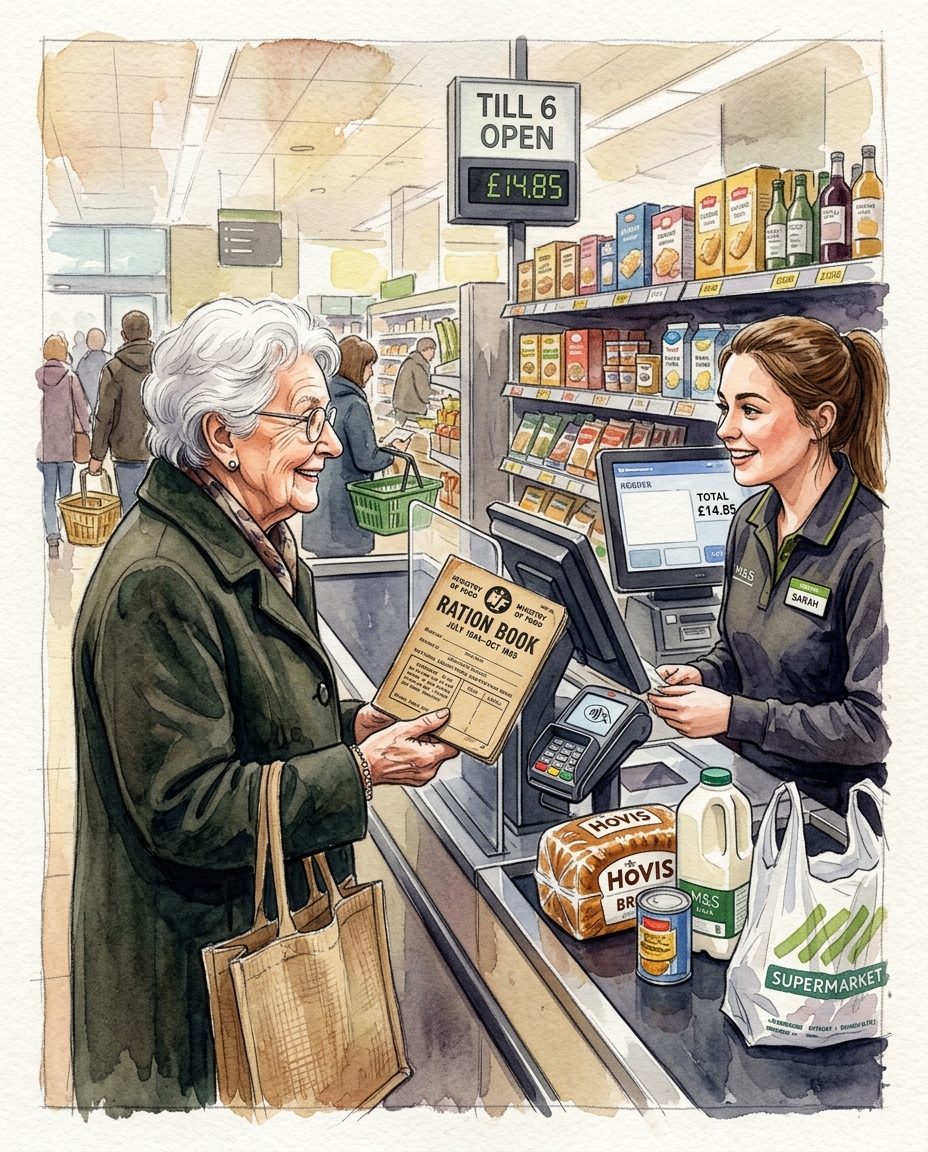
When most of us hear the word "rationing", we picture grainy black-and-white photos of queues outside butcher's shops, housewives measuring their weekly butter and those little coupon books our parents or grandparents mentioned. It feels like ancient history, from a world of bombed-out streets and Churchill speeches.
But here we are in 2026, and the question is being asked in Westminster corridors, in university economics departments, and increasingly, around kitchen tables across Britain: could it actually happen again?
The short answer is probably not in the full traditional sense. But the longer, more honest answer is more complicated and worth taking the time to understand.
First Things First: What's Actually Going On?
The Iran conflict has caused shockwaves through global markets. Many people outside financial circles haven't yet fully registered the impact. It's not just a distant dispute that doesn't affect us. The Middle East sits at the centre of the world's energy supply. When things go wrong there, ripple impacts reach petrol stations in Peterborough and supermarkets in Swansea before you know it.
At the heart of the concern is the Strait of Hormuz. You could drive its width in about half an hour. It's only about 21 miles wide at its narrowest point. Yet, about one-fifth of all the oil traded globally passes through it every day. Tankers carry the fuel that powers our cars, heats our homes, and keeps hospital lights on. When that waterway becomes dangerous or disrupted, the whole world notices.
Shipping companies have already started rerouting vessels, which adds thousands of miles to the journey. That costs money, and those costs eventually get passed on to us. Worse than that, the alternative routes do not have the same capacity, so the world's oil supply is not currently meeting demand.
What Does Rationing Actually Mean?
It's worth clearing this up because the word is often used loosely.
Rationing, in its formal sense, is when the government steps in and says you can only have a certain amount of a product. It doesn't matter how much money you have or how much you want to spend. It overrides the usual rules of supply and demand, used when fair distribution is more important than market forces.
During the Second World War, this covered almost everything you can imagine. Meat, sugar, butter, clothing, soap, petrol, and more were all rationed. People planned their weekly meals around what their ration books allowed. It was, by all accounts, tedious but effective at making sure everyone got something. The rules prevented the wealthy from buying up everything and leaving nothing for others.
What we saw during COVID was a much softer, informal version of the same idea. Supermarkets limited you to two packets of pasta or one bottle of hand sanitiser. The shops made those rules, not the government. But it shows how quickly things can change.
So, Why Are People Worried About Energy?
This is where the conversation becomes most urgent and most relevant to daily life.
Oil and gas prices have been climbing steadily throughout 2026. The Iran conflict is a major reason why. Britain is not entirely at the mercy of Middle Eastern oil. We have our own North Sea reserves and long-term supply agreements with Norway, a reliable and nearby partner. That's genuinely reassuring.
But energy is priced on global markets. Even if all the gas used to heat your home came from the North Sea, its price is still mostly set by what's happening in Houston, Rotterdam, and the Persian Gulf. It's a connected system, and we can't simply opt out.
What could formal energy rationing look like if it came to that? It might mean a weekly petrol allowance per vehicle. Households could be told they can only use a certain amount of electricity during peak hours. These aren't science fiction scenarios. Government departments have modelled them, and energy experts have discussed them for some time. During the 1970s oil crisis, the government even printed petrol ration books, though they were never actually used. They also briefly operated a "three-day week", where industries that used a lot of electricity had to shut down for part of each week.
For older people on fixed incomes, the damage will happen well before any formal rationing starts. It's the price rises that cause the most immediate harm. Heating bills go up. Filling the car costs more. The weekly shop becomes more expensive as transport and production costs filter through to shelf prices. That's already happening. It's already hurting people.
What About Food?
Full food rationing in Britain in 2026 would require a pretty catastrophic set of circumstances, and most experts would say we're nowhere near that point. But that doesn't mean food is completely insulated from what's going on.
Fertiliser, which British farmers need to grow the crops that feed us, is priced mostly based on natural gas. When gas prices rise, fertiliser becomes more expensive. Farming costs go up. Eventually, that shows up in the price of bread or potatoes. It's a chain, and every link feels the strain.
Imported foods are also becoming pricier. This is partly because shipping costs have risen so sharply. Mediterranean products, Asian goods, and anything that travels a long way by sea are affected. All of it is impacted by the rising cost and increasing complexity of global freight.
The government maintains food reserves and works closely with major supermarket chains to manage supply. There are contingency plans, we are not flying completely blind. But contingency plans are, by definition, only tested when things actually go wrong. Nobody really knows how well they'd hold up under sustained pressure.
What About Medicines?
This topic doesn't get discussed enough, and for many older people, it may be the most important question of all.
Pharmaceutical supply chains are genuinely complex and genuinely vulnerable. Many medicines, including some very common ones, are manufactured in parts of the world where shipping disruption could cause real problems. The active ingredients often travel halfway around the world. Only then does the finished tablet end up in your pharmacy bag.
The NHS has systems to manage drug shortages, and pharmacists are very good at finding alternatives when a drug becomes unavailable. But a long conflict affecting global shipping could put real pressure on these systems, especially for people who rely on regular prescriptions. If you take daily medication for a long-term condition such as heart disease, diabetes or thyroid problems, it's a good idea to check in with your GP or pharmacist. Not to panic, but to understand your situation and identify any concerns ahead. Being aware is always useful.
Could the Government Actually Do This? Do They Have the Power?
Yes, they absolutely do, and fairly quickly if needed.
The Civil Contingencies Act 2004 gives the British government sweeping emergency powers. These can be activated without a full debate and vote in Parliament, at least in the short term. Ministers can requisition goods, control prices, restrict movement, and introduce rationing. These powers exist because some crises don't allow for months of parliamentary procedure.
A modern rationing system would look nothing like the Second World War version. There would be no little books of paper coupons. It would almost certainly be digital, tied to your National Insurance number, NHS number, or maybe your driving licence. Petrol stations would scan something, and supermarkets would record purchases at the checkout. The infrastructure for this kind of monitoring already exists in various forms, for example, supermarket loyalty cards. It would just be a matter of connecting the systems.
Whether a government would actually pull that trigger is a different matter. Rationing is politically explosive. It signals a crisis and frightens people. Any government introducing it would face enormous scrutiny and would want to be very sure they had no other option before taking that step.
If rationing were introduced, there would almost certainly be a priority system. It would be similar to how COVID vaccinations were rolled out, starting with the most vulnerable. Older people, those with serious health conditions, and disabled people would likely receive more generous allowances or be protected first. But the details of how such a system would work in practice are still unknown. It hasn't been designed yet.
What we do know is that the systems for identifying vulnerable people are already in place. The NHS, local councils, and the benefits system already have these lists. Whether they could be used effectively is another question.
One practical thing worth doing right now, if you haven't already, is to make sure you're claiming everything you're entitled to. Pension Credit, the Winter Fuel Payment, and Council Tax Reduction exist to help people struggling with the cost of living. A surprisingly large number of people who qualify for them aren't claiming them. The government's website and organisations like Age UK can help you check.
Should I stockpile?
The official answer is no, you shouldn't stockpile. Panic buying is self-fulfilling. When enough people rush to shops and load up their trolleys, they create the shortage they feared. We saw this with toilet roll in 2020. In hindsight, it seems comic, but at the time, it caused real distress for people simply needing the basics.
Unfortunately, some people will stockpile anyway, creating problems for everyone else, which in turn encourages more of the same behaviour, because nobody wants to be the only person left with nothing after everyone else has cleared the shelves.
A sensible, calm approach is probably a reasonable compromise. Gradually building up a week or two's worth of tinned and dried food at home is good sense. Not panic buying, just basic preparedness. The same goes for a reasonable supply of any medications you take regularly, though you'll need your GP's help with that.
Beyond that, staying informed through reliable news sources, rather than whatever is causing outrage on social media this week, is genuinely useful. There's a lot of noise out there, and many people with different agendas trying to frighten you. Take a breath, read carefully, and treat anything that seems designed to alarm you with a healthy dose of scepticism.
The Bottom Line
Nobody is seriously suggesting that Britain is weeks away from ration books and queues around the block. The situation would have to deteriorate significantly before anything like that happened, and the government has tools and plans to try to prevent it from reaching that point.
But what's already happening is real. We see rising energy costs, food price inflation, and supply chain disruptions. And it's affecting people's lives right now. The Iran conflict has added genuine instability to an already complicated global picture, and pretending otherwise would do you a disservice.
The sensible approach is to stay calm, stay informed, take some basic steps to give yourself a bit of a financial and practical cushion, and keep an eye on how things develop. Britain has faced serious crises before and come through them. That's not complacency, it's history.
But it's also fair to say: this one is worth paying attention to.